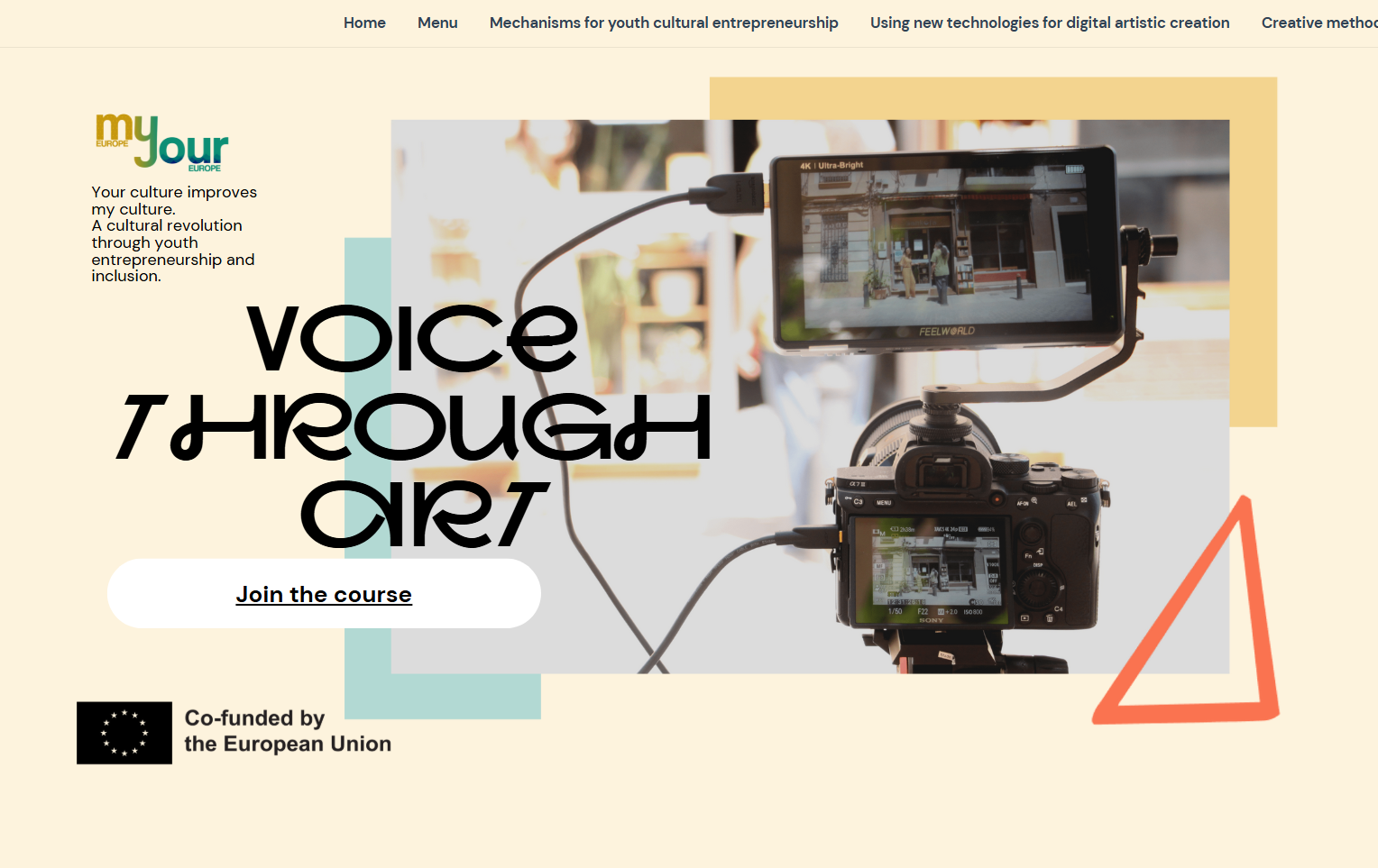
The Project
Voice Through Art was a 2-year European project (2022–2024) bringing together 6 partner organisations across Spain (2), Greece (2) and Italy (2) with a shared mission: promoting cultural entrepreneurship and social inclusion for young people — with a particular focus on racialised and migrant youth.
The project produced a three-unit educational platform covering social entrepreneurship in the cultural sector, artistic and technological tools, and inclusive project design. The aim was to create a digital space where young creators — European-born and migrant alike — could share their work, build solidarity networks and develop the skills needed for social and labour inclusion through art.
Scope & Responsibilities
Educational content development: Contributed to the creation of the educational unit Audiovisuals as a Tool for Social Transformation — specifically the photojournalism section. This involved researching, structuring and writing content that would be accessible to young people across different national and linguistic contexts, while maintaining the rigour expected of EU-funded educational materials.
Quality coordination: Participated in regular transnational meetings — both in-person in partner countries and online — throughout the two-year project to review materials, ensure quality standards and align on project results across the partnership.
What This Project Demonstrates
Contributing to an educational guide is a different kind of communications work: it requires thinking about how knowledge is structured and transferred, not just how it is presented. The photojournalism unit had to be both pedagogically sound and genuinely useful to young people with varying levels of access to tools and formal education.
It also reflects experience with the slower, more iterative rhythm of EU project work — where quality is built through repeated rounds of review and cross-partner coordination, not single deliverables.
Impact
- Educational unit on photojournalism and audiovisuals delivered as part of a 3-unit platform
- 6 partner organisations across Spain, Greece and Italy
- Transnational quality meetings attended over a 2-year project lifecycle
- Content designed for accessibility and inclusion of racialised and migrant youth